

Radiolab War Of The Worlds
From 'The State of war of the Worlds' circulate: 'This is the end at present.'

Invader? No, it's a human dressed as one in 1988. He was in Grovers Mill, N.J., at a 50th anniversary celebration of The War of the Worlds broadcast. Chris Lischy/AP hide caption
toggle caption
Chris Lischy/AP
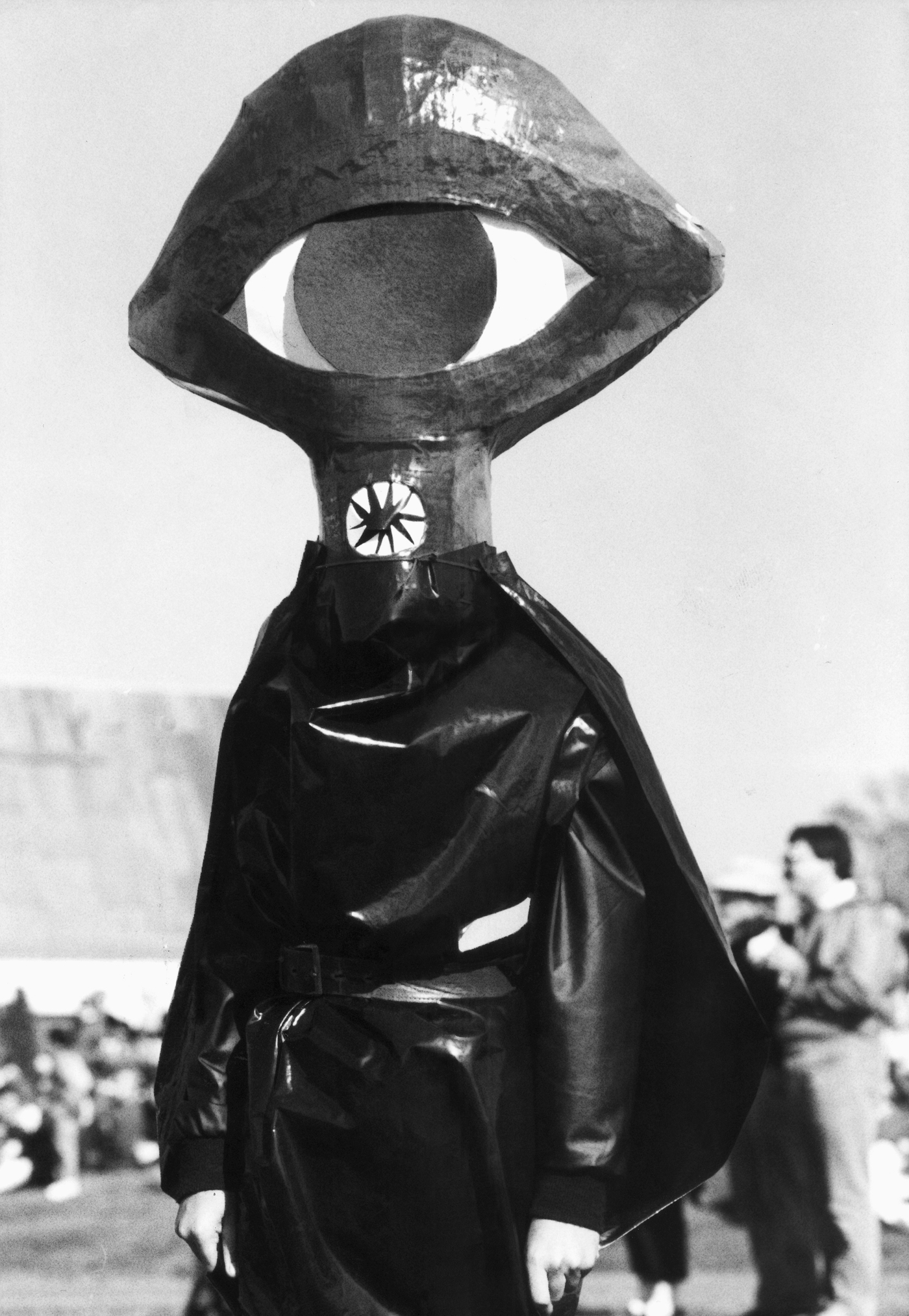
Invader? No, information technology'south a human being dressed every bit one in 1988. He was in Grovers Mill, N.J., at a 50th anniversary celebration of The War of the Worlds broadcast.
Chris Lischy/AP
We interrupt this blog to bring you a special message:
Martians have invaded New Jersey!
OK, as far every bit we know that hasn't happened.
Just we wanted to issue that faux alert considering 75 years agone tonight, as our friend Korva Coleman pointed out on the NPR Newscast, Orson Welles and his troupe of radio actors interrupted the Columbia Broadcasting System's programming to "written report" that our planet had been invaded.
Ever since then, it's been accepted as fact that the broadcast scared the dickens out of many Americans.
Morning Edition, for instance, reported in 2005 that "listeners panicked, thinking the story was real." Many supposedly jumped in their cars to flee the area of the "invasion."
Simply this past weekend, our colleagues at Radiolab devoted their very first live hour to a "deep dive into one of the almost controversial moments in broadcasting history: Orson Welles' 1938 radio play nigh Martians invading New Jersey."
According to Radiolab, about 12 million people were listening when Welles' broadcast came on the air and "virtually 1 in every 12 ... thought it was true and ... some percentage of that 1 million people ran out of their homes."
"That constitutes a major freakout," Radiolab says.
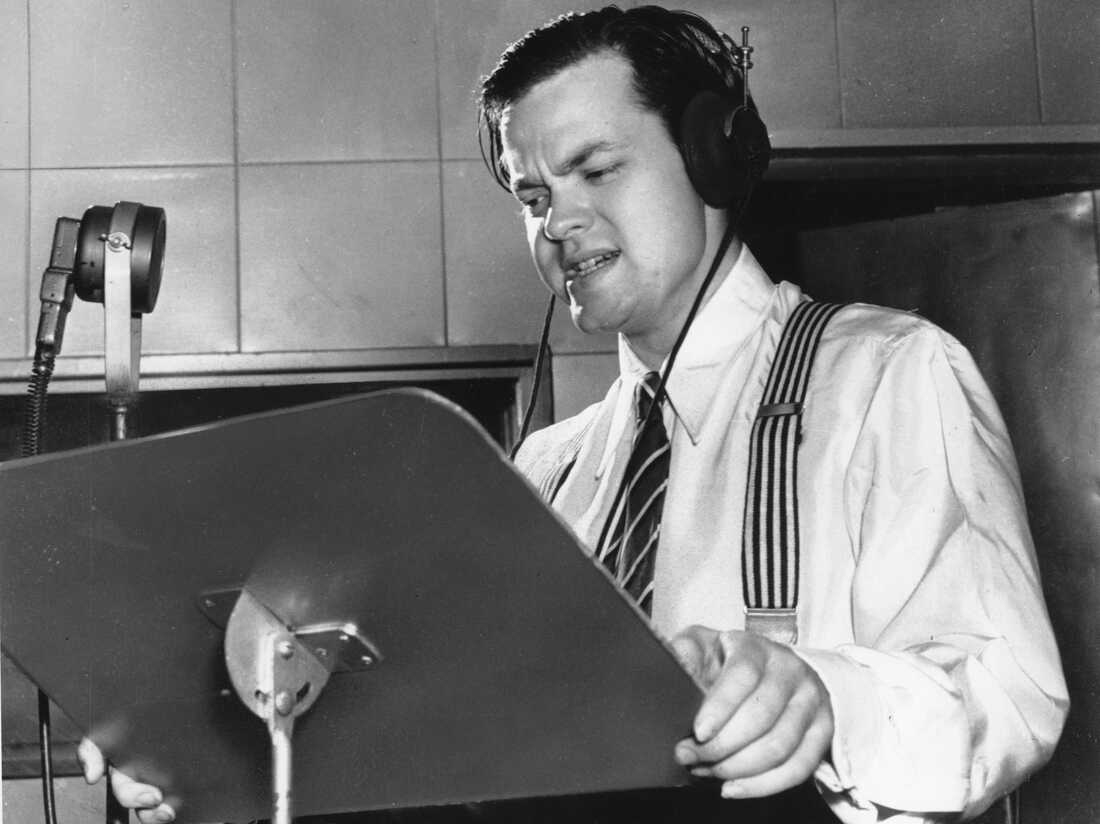
Orson Welles delivering a radio broadcast in 1938, the aforementioned year he aired his State of war of the Worlds fake news program. /AP hide explanation
toggle caption
/AP
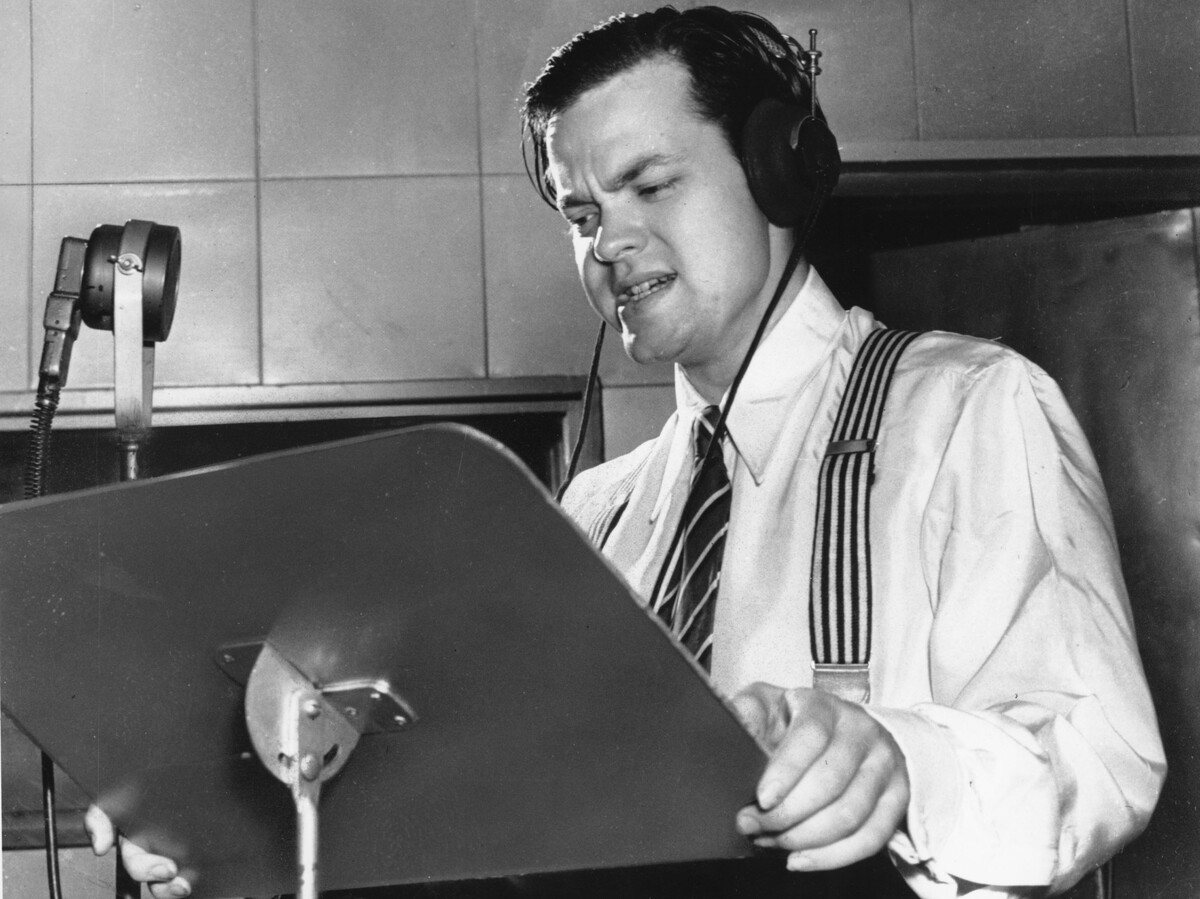
Orson Welles delivering a radio circulate in 1938, the same year he aired his War of the Worlds fake news program.
/AP
Well, Slate has a different opinion. "The supposed panic was so tiny as to be practically immeasurable on the night of the broadcast," information technology concludes. According to Slate:
"Far fewer people heard the broadcast — and fewer still panicked — than most people believe today. How do we know? The night the program aired, the C.East. Hooper ratings service telephoned v,000 households for its national ratings survey. 'To what program are you listening?' the service asked respondents. Simply two pct answered a radio 'play' or 'the Orson Welles program,' or something similar indicating CBS. None said a 'news broadcast,' according to a summary published in Broadcasting. In other words, 98 pct of those surveyed were listening to something else, or nil at all, on Oct. 30, 1938. This miniscule rating is not surprising. Welles' program was scheduled confronting one of the most popular national programs at the time — ventriloquist Edgar Bergen's Chase and Sanborn Hour, a comedy-diversity evidence."
Slate also argues that there's no information to support the idea that many radio listeners heard about the broadcast and tuned in during it. And it points out that "several important CBS affiliates (including Boston's WEEI) pre-empted Welles' broadcast in favor of local commercial programming, further shrinking its audience."
So how did the story of the "panic" grow over the years? Slate blames newspapers, which allegedly "seized the opportunity presented by Welles' program to discredit radio every bit a source of news. The newspaper industry sensationalized the panic to bear witness to advertisers, and regulators, that radio management was irresponsible and not to be trusted."
Radiolab isn't the but news outlet marker the 75th anniversary, of course. There'south also this written report from PBS-TV'due south American Feel, which says that "although most listeners understood that the program was a radio drama, the next day's headlines reported that thousands of others plunged into panic, convinced that America was nether a deadly Martian assault."
So which was it, mass panic or hyped-up hysteria? Something in betwixt? This blogger recalls his father saying the broadcast went mostly unnoticed in the serenity hills of Western New York Country.
Whatever other showtime- or 2nd-manus memories are welcome in the comments thread.
From 'The War of the Worlds' broadcast: 'This is the terminate now.'

Radiolab War Of The Worlds,
Source: https://www.npr.org/sections/thetwo-way/2013/10/30/241797346/75-years-ago-war-of-the-worlds-started-a-panic-or-did-it
Posted by: tyernage1964.blogspot.com
0 Response to "Radiolab War Of The Worlds"
Post a Comment